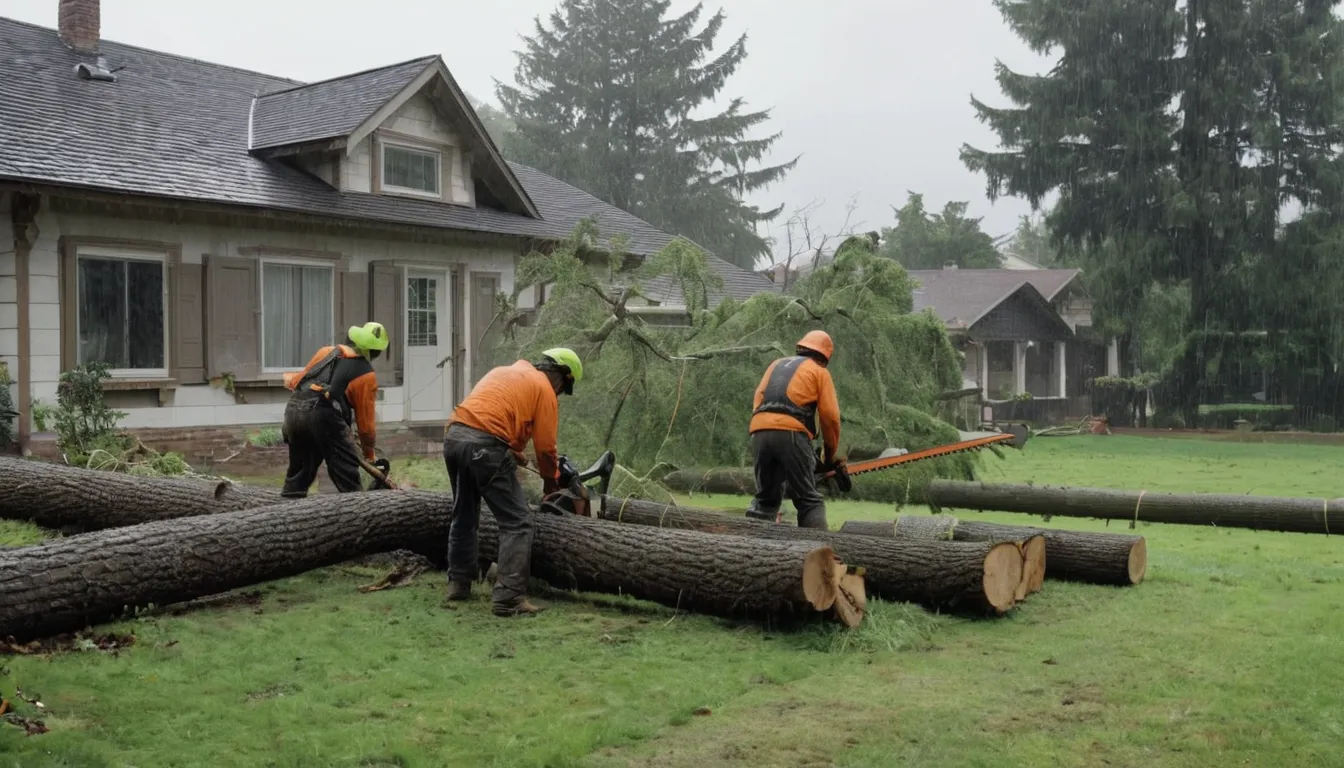
Emergency tree removal covers trees that are already causing harm or are about to. That means a trunk on a roof, a limb through a fence, or a trunk leaning hard after wind and rain. Youeaenbtc Tree Service is a referral service. We connect homeowners with independent providers in our network who handle this work.
Providers do the work. They assess the tree, secure the area, cut it down in controlled sections and haul it away. Availability varies by provider and by how busy the weather has been. You can compare estimates without pressure and with no obligation. This page explains what counts as urgent, what to expect, how insurance fits in, and how to lower the odds of a repeat.
Tree Down? Move People First
A fallen tree is a safety problem before it is a cleanup job. Get everyone out of any room or yard area under the tree. Keep children and pets away from the trunk, the roof and the lawn beneath it.
Treat every wire near the tree as live. Stay well back, and report downed lines to the utility. Do not try to move branches that touch a wire.
What Counts as an Urgent Tree Problem
Emergency tree removal is for trees that are already doing damage or are likely to. Typical cases:
- A trunk or large limb resting on the house, garage or fence
- A tree blocking a driveway or the only way out
- A leaning tree with fresh soil heaved up at the base
- A split trunk or a hanging limb above a living space
- Roots torn loose after saturated ground gave way
What Can Wait a Few Days
A dead branch far from any structure is not urgent. Neither is a tree that simply looks tired. Those jobs fit a normal schedule, so you can take time to compare estimates.
If you are unsure which group your tree falls into, describe it to a provider. A quick description and a phone photo are often enough to sort it out.
How Storm Tree Clearance Works
A provider starts by walking the site. They look at where the weight sits, what the tree is touching and where the cut pieces can safely go.
Next they secure the area. Then comes the cutting, usually from the top down. Heavy sections are lowered with rigging, which means ropes and pulleys that bring weight down under control instead of dropping it.
Why a Tree on a Roof Needs Care
A tree resting on a structure is often under tension. Bent wood can snap back when cut, and one wrong cut can shift the load onto the house.
This is the reason a tree falling service relies on planning and the right equipment. Please do not climb up or cut it yourself. Wet bark and wind make the job riskier.
Working With Your Insurance
Some policies may cover sudden damage from a fallen tree. Others limit what they pay for removal. Check your policy and ask your insurer before you sign anything.
Providers can often help document damage for a claim. Ask for an itemized written quote that separates removal from any repair work.
Document Before the Cleanup
Take photos of the tree, the damage and the surrounding area before anything is moved. Capture wide shots and close-ups. Note the date and keep any written quotes and receipts together.
After a Big Storm: What to Expect
When wind hits a wide area, many homeowners need help at once. Providers usually sort jobs by danger, so a tree on a bedroom roof gets ahead of a tree in a back field.
Availability varies. Request a callback to check provider availability, and ask what a realistic window looks like. If the wait is long, a temporary roof tarp can limit rain damage in the meantime.
Compare Before You Commit
Urgency does not mean you must accept the first number. Even a short comparison can reveal differences in scope, cleanup and disposal.
Pressure to sign on the spot is a reason to pause. A clear written quote is fair for any job.
Questions to Ask the Provider
A few questions settle most doubts:
- Is the quote written, and does it include cleanup and haul-away?
- Do you carry liability and workers' compensation coverage, and can I see proof?
- How will you protect the roof, lawn and fence during the work?
- Is stump grinding included, or priced separately?
- What happens if more damage turns up once the tree is moving?
Stump Grinding After the Cut
Once the trunk is gone, a stump remains. Stump grinding uses a machine to chip the stump below ground level. Ask for it in the same quote so the site is not left half finished.
Preventing the Next Storm Problem
Remove it, then maintain. A long wet season softens soil and loosens roots. Moss and damp can hide decay on trunks and limbs.
Have nearby trees checked for dead wood, leaning, cracks and root lift. Pruning removes weak limbs before wind does. Good drainage keeps water from pooling around the base.
Check the Property After Cleanup
Walk the area once the debris is gone. Look at the roof edge, gutters, fence lines and crawl space vents for hidden damage. Older craftsman houses and newer townhomes both have tight spots where a falling limb can leave a crack or a loose panel.
Ready to Get Moving?
If a tree is threatening your home right now, Request a callback to check provider availability. If the situation is stable, you can request an estimate and compare options at your own pace.
What's Included
Fallen Tree Removal
Providers cut and clear trunks and limbs that have come down on homes, yards and driveways.
Storm Tree Clearance
Broken and tangled trees are cleared after windstorms so you can safely use your property again.
Hazard Tree Takedown
Leaning, split or uprooted trees that threaten your home can be taken down in controlled sections.
Cleanup Options
Ask about debris haul-away and stump grinding so the job is finished.
Typical Emergency Tree Removal Costs
Prices depend on tree size, access, damage and conditions. These are typical U.S. ranges only. Always get a written quote from the provider before work begins.
| Item | Typical range | Notes |
|---|---|---|
| Small tree removal | $150 – $500 | Easy access, little damage |
| Medium tree removal | $500 – $1,500 | Common for yard trees |
| Large tree removal | $1,500 – $4,000 | Height and nearby structures raise cost |
| Tree on a house or roof | $1,500 – $5,000+ | Rigging and careful cutting required |
| Debris haul-away | $100 – $600 | May be included, so check your quote |
| Stump grinding | $100 – $500 | Priced by stump size and access |
How It Works
Make Everyone Safe
Move people away from the tree, stay clear of wires and take photos if it is safe.
Contact a Provider
Request a callback or request an estimate to be matched.
Compare Your Options
Review written quotes covering scope, cleanup and any stump work.
Maintain After Removal
Schedule pruning and drainage checks to reduce the chance of repeat damage.
Why Call Youeaenbtc Tree Service
Independent Local Providers
Providers in our network are independent and local, and they handle the work themselves.
Clear Comparisons
Compare written estimates side by side before you decide.
No Obligation
Requesting an estimate does not commit you to hiring anyone.
Follow-Up Focus
Learn about pruning, drainage and stump grinding to help prevent repeat problems.
Other Services
Need emergency tree removal in Bellevue?
Describe your tree and what you want done. Request an estimate, or Request a callback to check provider availability. No obligation to hire anyone.
No obligationEmergency Tree Removal FAQ
What counts as emergency tree removal?
It covers trees that are already damaging property or likely to. Examples include a tree on a roof, a blocked driveway, a split trunk or a leaning tree with lifted roots.
Will my homeowners insurance pay for a fallen tree?
Some policies may cover sudden damage, and coverage for removal often has limits. Check your policy and ask your insurer. Providers can often help document damage, such as photos and itemized quotes, for a claim.
Can I remove a fallen tree myself?
It is risky. Fallen trees can hide tension, tangled wires and unstable limbs, and wet conditions make saws and ladders more dangerous. Keep people clear and let a qualified, insured provider assess the job before anyone starts cutting.
Tell us what happened
Describe your tree and what you want done. Request an estimate, or Request a callback to check provider availability. No obligation to hire anyone.
No obligation